Colmars-les-Alpes · 04
Les forts et le musée de Colmars-les-Alpes
A fortified border village of the Haut-Verdon from the age of Vauban, guarded by its ramparts and two forts — including the Fort de Savoie, now turned into a museum.
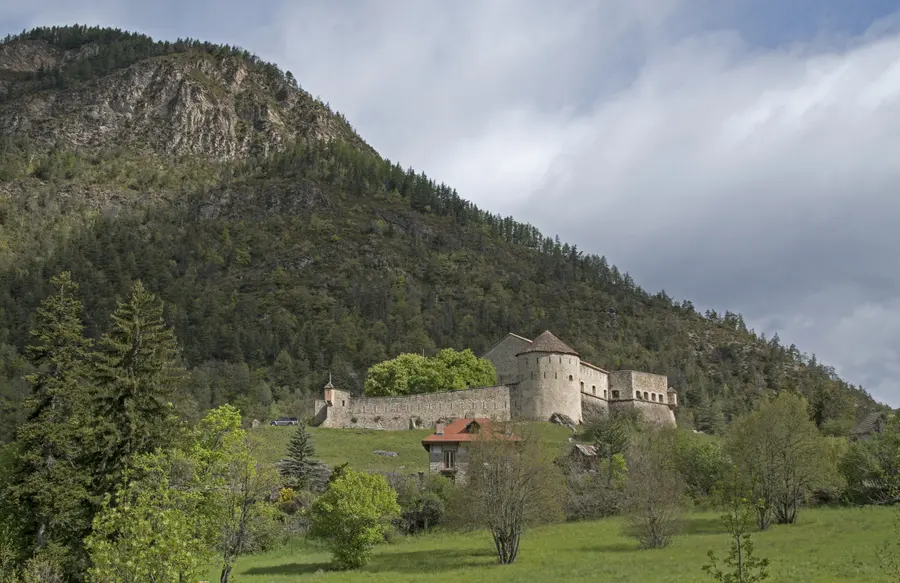
- Colmars-les-Alpes (04370), in the Haut-Verdon, was for more than three centuries (1388-1713) a border town of the Kingdom of France facing the Duchy of Savoy: hence its double protection, a ring of ramparts and two detached forts.
- In 1692, amid the War of the League of Augsburg, Louis XIV put Vauban in charge of overhauling the town's defences; Vauban delegated the work on site to the architect Antoine Niquet and the engineer Guy Creuzet de Richerand.
- The two forts flanking the town were built between 1693 and 1696: the Fort de Savoie (or Saint-Martin) upstream, to the north; the Fort de France (or du Calvaire) downstream, to the south.
- Only the Fort de Savoie can be visited (depending on the season): it houses the permanent exhibition “Histoire(s) d'un fort” (Story/Stories of a Fort) and the immersive screening “Le récit de Vauban” (The Vauban Story). It has been a listed Historic Monument since 1923.
- In 2025, Colmars-les-Alpes was named one of “Les Plus Beaux Villages de France” (The Most Beautiful Villages of France).
Colmars, a Vauban town
- The first fortifications date back to 1382, after the neighbouring village of Allos was annexed to the Duchy of Savoy, turning Colmars into a border town.
- In 1692, after the Duke of Savoy joined the League of Augsburg, Louis XIV entrusted Vauban with revising Colmars' defensive system.
- Vauban did not oversee the work himself: he delegated it to the architect Antoine Niquet (who restored the medieval walls and added five bastioned towers) and the engineer Guy Creuzet de Richerand.
- Coming to inspect the work in October 1700, Vauban criticised what had been built (the walls were judged too low and too thin) and put forward new plans, which came to nothing after his death in 1707. The Fort de Savoie was therefore built to a design different from Vauban's own project — it is a fort of the Vauban system, not one he designed himself.
- The Treaty of Utrecht (1713) pushed the border further away and cost Colmars its strategic role. The town is today a member of the Réseau des sites majeurs de Vauban (Network of Major Vauban Sites).
The Fort de Savoie
- On the Saint-Martin hill, upstream (to the north) of the town, it faced the former border with the Duchy of Savoy.
- Built between 1693 and 1696 to the plans of Guy Creuzet de Richerand: a bastioned structure of about 50 m by 25 m, trapezoidal in shape, listed as a Historic Monument since 1923.
- Here you'll find a guardhouse, a drawbridge, a powder magazine, a covered way, a round tower and a pentagonal tower; the round tower's timber frame is made of larch, a tree species common in the Haut-Verdon.
- The permanent exhibition “Histoire(s) d'un fort” traces the border with Savoy and the fort's architecture through models and a staged exhibition design, guided by a character: Claude Du Puy, a captain who arrived in 1693 at the head of a company sent to build the forts.
- In the guardhouse, the immersive screening “Le récit de Vauban” (about twenty minutes long) brings the building of the forts back to life. The fort also hosts concerts, theatre and temporary exhibitions.
The Maison Musée and the rampart walk
- Set within the fortified village, the Maison Musée du Haut-Verdon is a museum of art and traditions of the upper Verdon valley, housed in a bourgeois house from the late 17th century.
- It brings together a collection of around 10,000 objects, from the late 14th to the second half of the 20th century: religious art, the early days of tourism in the Haut-Verdon, a schoolroom of days gone by, and a reconstructed bourgeois interior from the early 20th century.
- The rampart walk (about 500 m) links ten exhibition towers: the west wing devoted to military history, the east wing to traditional trades and living heritage.
- An apothecary's garden, dedicated to the local apothecary Jean Saurin, displays medicinal plants. The whole complex (museum, rampart walk, Fort de Savoie) has been run since 2003 by the Association Maison Musée et Forts Vauban du Haut-Verdon (Haut-Verdon Maison Musée and Vauban Forts Association).
The Fort de France and the ramparts
- Downstream (to the south) of the town, the Fort de France watched over the entrance to Colmars on the Kingdom of France side; it's also called the Fort du Calvaire (and, later, Fort Soult). It's a compact redoubt on a square plan, also built around 1693-1696.
- It isn't normally open for unguided visits: you can walk around the outside along a loopholed caponier, and occasional guided tours are sometimes organised.
- The town has kept its ring of ramparts and its gates: the Porte de France (France Gate) to the south, and the Porte de Savoie (Savoy Gate), also known as the Porte de l'Eau (Water Gate), to the north.
- This silhouette of a town entirely enclosed by walls, guarded by two forts, makes Colmars one of the rare Vauban-style fortified complexes in the Southern Alps.
Colmars-les-Alpes lies in the Haut-Verdon (04370), at an altitude of over 1,200 m, on the road that runs up the Verdon valley (the D908) between Saint-André-les-Alpes and Allos, upstream of the great gorges. The fortified village is best explored on foot: the Maison Musée, the rampart walk and the Fort de Savoie are located within and along the walls. Not to be confused with the neighbouring commune of Villars-Colmars.
Official museum website (opening hours & prices) ↗Frequently asked questions
Can you visit both of Colmars' forts?
Only the Fort de Savoie can be visited, at certain times of the year, along with its exhibitions. The Fort de France (Fort du Calvaire) isn't normally open for unguided visits: you can walk around the outside via a loopholed caponier, with occasional guided tours.
Is the Fort de Savoie really “a Vauban fort”?
It's a fort from the Vauban era and the Vauban system, but Vauban didn't design it himself: it was built to the plans of the engineer Guy Creuzet de Richerand, following a layout different from Vauban's own 1693 project — which Vauban himself criticised during his 1700 inspection.
Where exactly is the Maison Musée?
In the fortified village of Colmars-les-Alpes (04370), at the heart of the Haut-Verdon. Be careful not to confuse it with the neighbouring commune of Villars-Colmars: some online listings wrongly place the museum in Villars-Colmars.
Is Colmars one of Les Plus Beaux Villages de France?
Yes: in 2025, Colmars-les-Alpes was named one of “Les Plus Beaux Villages de France” (The Most Beautiful Villages of France).
Check for yourself
The sources this page relies on, one click away. We would rather you be able to contradict us than ask you to take our word for it.
- Association Maison Musée et Forts Vauban du Haut-Verdon — site officielhaut-verdon-maison-musee.com
- Fort de Savoie — Maison Musée du Haut-Verdonhaut-verdon-maison-musee.com
- Réseau des sites majeurs de Vauban — fiche Colmarssites-vauban.org
- Verdon Tourisme — Fort de Savoie (Colmars)verdontourisme.com
4 of these 4 links responded during our last automated check, on 2026-08-22. A broken link is removed, never left in place.