Castellane · 04
Maison Nature & Patrimoines de Castellane
In Castellane, the eastern gateway to the Gorges du Verdon, the site centre of the Haute-Provence Geological Reserve, home to its “Sirens and Fossils” museum on the Verdon's vanished sea.
- The Maison Nature & Patrimoines is Castellane's museum and discovery centre, in the heart of the village, run by Castellane town council.
- Its permanent exhibition, "Sirens and Fossils", tells the story of a time around 40 million years ago when the sea covered this land and sirenians — marine mammals related to manatees and dugongs — lived here.
- The site is an official centre of the Haute-Provence National Geological Reserve; the Castellane sirenian site is one of its flagship geotopes.
- You'll also find a “Relais du Parc naturel régional du Verdon” (a Verdon Regional Nature Park relay point) here, along with temporary exhibitions on the traditions of the Moyen Verdon area, refreshed in partnership with the Petra Castellana association.
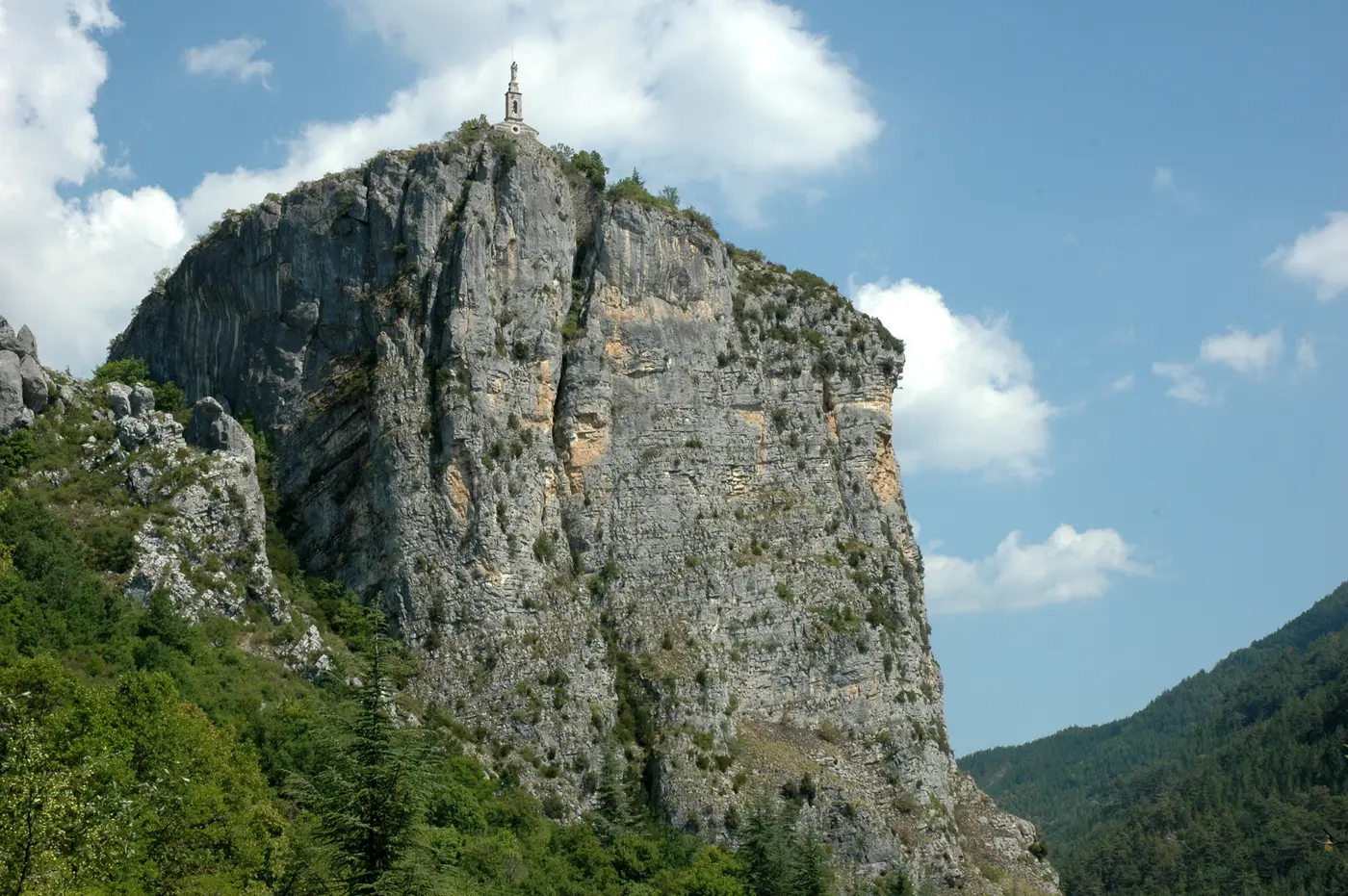
- Castellane, the eastern gateway to the gorges, overlooked by its Roc and the Notre-Dame-du-Roc chapel, is an ideal starting point for understanding the region's geological and natural heritage.
What you'll see
- The permanent “Sirens and Fossils” exhibition presents the geology of the Castellane and Verdon area, from the time a warm sea covered the region around 40 million years ago.
- Sirenians — marine mammals and ancestors of manatees and dugongs, nicknamed “sea cows” — are brought to life here through life-size models, films and landscape reconstructions.
- The visit includes photographs, illustrated panels and a display that explores the link between these “sea cows” and the sirens of legend.
- Temporary exhibitions on local traditions and the heritage of the Moyen Verdon area (farming, crafts, beliefs, festivals, archaeology…) are refreshed regularly, created with the Petra Castellana association.
- The centre also has a shop and a welcome area to help you plan your discovery of the area.
The Haute-Provence Geological Reserve
- The Haute-Provence National Geological Reserve was created by decree in 1984 and is described as the largest geological reserve in Europe.
- It covers a vast area between the Alpes-de-Haute-Provence and Var départements, built around numerous protected geological sites.
- It's part of the Haute-Provence Geopark, awarded UNESCO Global Geopark status, and was one of the founding members of the European Geoparks Network.
- Its flagship geotopes include the Dalle aux Ammonites (ammonite slab) at Digne-les-Bains, the ichthyosaur site at La Robine, and the sirenian site at Castellane.
- Within the protected area, collecting, destroying or damaging fossils and minerals is regulated by law.
Nature & heritage of the Castellane area
- The Maison describes itself as a welcome, starting and discovery point for the area, right in the heart of Castellane village.
- It houses a “Relais du Parc naturel régional du Verdon” (Verdon Regional Nature Park relay point), which has information on ways to discover the area and its heritage.
- It runs nature outings with mountain guides, as well as guided geology outings to the Reserve's sites.
- The Sentier des Siréniens (Sirenians' Trail), laid out by the Geological Reserve, starts at the Col des Lèques (about 8 km from Castellane, towards Digne-les-Bains) and lets you see fossilised sirenian bones, around 40 million years old, still in their original setting.
- The Maison runs a summer season of events and activities for children, with local partners including the Petra Castellana association.
Why Castellane
- Castellane is the eastern gateway to the Gorges du Verdon, on the road leading to the great canyon.
- The village is overlooked by the Roc, an imposing limestone block that rises nearly 200 metres above the Verdon.
- At the top of the Roc, the Notre-Dame-du-Roc chapel watches over the village, close to the ruins of the old town of Petra Castellana.
- This position, at the meeting point of the Pre-Alps and the Verdon, makes Castellane a natural gateway to the geological heritage of the Haute-Provence Reserve.
The Maison Nature & Patrimoines is in the heart of Castellane village (Alpes-de-Haute-Provence, 04120), the eastern gateway to the Gorges du Verdon. It serves as a welcome and starting point for exploring the area. The Sentier des Siréniens (Sirenians' Trail), a natural complement to the visit, starts at the Col des Lèques, about 8 km from central Castellane towards Digne-les-Bains.
Official museum website (opening hours & prices) ↗Frequently asked questions
What is the Maison Nature & Patrimoines de Castellane?
It's Castellane's museum and discovery centre, run by the town council. It houses the permanent “Sirens and Fossils” exhibition on the area's geological heritage, a “Relais du Parc naturel régional du Verdon” (Verdon Regional Nature Park relay point) and exhibitions on local heritage. It also serves as an official centre of the Haute-Provence Geological Reserve.
What is a sirenian, and why is it mentioned in Castellane?
Sirenians are marine mammals related to today's manatees and dugongs. Around 40 million years ago, a warm sea covered the Castellane area, and these animals lived here. Their fossils, preserved in place in the Vallée des Sirènes (Valley of the Sirens), have made the area a recognised geological site.
Can you see real sirenian fossils at the museum?
The museum tells the story of the sirenians mainly through life-size models, films and landscape reconstructions. The fossilised bones preserved in their original setting can be seen out in the field, along the Sentier des Siréniens (Sirenians' Trail) laid out by the Geological Reserve, at the Col des Lèques.
What's the link with the Haute-Provence Geological Reserve?
The Maison houses the Sirens and Fossils museum, one of the sites in the network of the Haute-Provence National Geological Reserve — the largest geological reserve in Europe and a UNESCO Global Geopark. The Castellane sirenian site is one of its flagship geotopes.
Check for yourself
The sources this page relies on, one click away. We would rather you be able to contradict us than ask you to take our word for it.
- Maison Nature & Patrimoines — site officielmaison-nature-patrimoines.com
- Exposition Sirènes et Fossiles — site officielmaison-nature-patrimoines.com
- Maison Nature & Patrimoines — Mairie de Castellanemairie-castellane.fr
- Réserve géologique de Haute-Provence — Géoparc de Haute-Provence (UNESCO)geoparchauteprovence.com
- Wikipédia — Réserve naturelle géologique de Haute-Provencefr.wikipedia.org
5 of these 5 links responded during our last automated check, on 2026-08-22. A broken link is removed, never left in place.